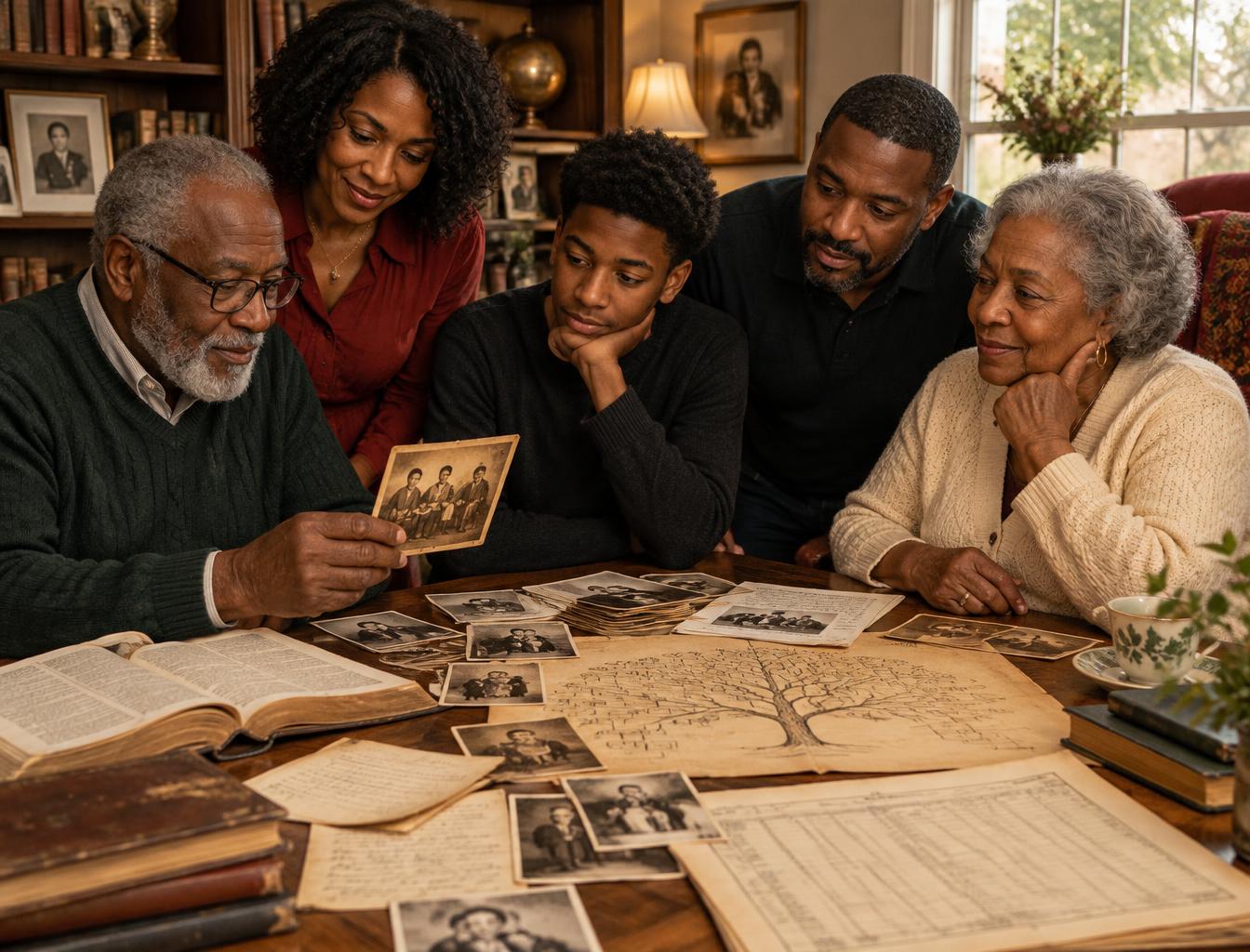
Build Your Family Tree
Record names, dates, places, and relationships — including name variations and uncertain details.
Organize Historical Records
Save census, Freedmen's Bureau, military, probate, church, and cemetery records with citations.
Explore Possible Connections
AI-guided research plans, document summaries, and match comparisons — always labeled by strength of evidence.
Preserve Your Family Legacy
Record oral histories and family stories, build timelines, and export a Family Legacy report.
Private by default
Your family tree, documents, DNA notes, and information about living relatives are private by default. Files are stored securely and only you can open them. We never sell personal family information, and private family information is never used to train public AI models. Nothing is published without your confirmation.
Free record collections to start with
1870 is the first U.S. census listing most formerly enslaved people by name. Earlier slave schedules (1850, 1860) list enslavers' names, not the enslaved.
Labor contracts, marriages, rations, and schools, 1865–1872.
Revolutionary War pension files and Civil War USCT service records often include family details.
Enslaved people were often listed by first name in an enslaver's estate papers. Search the enslaver's name.
County court and plantation journals may name enslaved workers.
Church minutes and burial registers sometimes record enslaved and free Black members.
Post-1865 marriage and cohabitation registrations; SC death certificates begin in 1915.
Runaway advertisements, 1867–68 voter registrations, and obituaries can add details.
Plats and county maps help place a family; WPA slave narratives preserve first-person accounts.
Black History Legacy is independent and not affiliated with these collections. Some linked services may require their own free or paid account.
Choose Your Family Research Plan
Start your family tree for free and upgrade when you are ready for more research tools, document organization, and AI-guided assistance.
Black History Legacy provides educational research tools and AI-assisted record guidance. Historical records may be incomplete, inaccurate, damaged, missing, or recorded under another person's name. Suggested matches are not guaranteed. Users should verify findings using original records and cited sources.